Finding out that you have tested positive for Group B Streptococcus (GBS) during pregnancy can sound frightening, especially when you start reading about infections in newborn babies.
The reassuring part is that GBS is very common, and for most pregnant women it does not cause any symptoms or health problems. Testing positive usually does not mean that you are sick, that your pregnancy is high risk, or that something is wrong with your baby.
Instead, the result tells your maternity team that you carry a type of bacteria that can occasionally be passed to a baby during labour or around the time of birth. Knowing about it gives your care team an opportunity to reduce that risk.
If you are preparing for birth in Vienna, you may hear GBS called B-Streptokokken, Streptokokken der Gruppe B, Group B Streptococcus, or simply GBS.
So what happens after a positive GBS test? Do you need antibiotics during pregnancy? Can you still have a vaginal birth? Does GBS mean you need a caesarean section? And what happens to your baby after birth?
Here is what you need to know.
What is GBS?
Group B Streptococcus is a type of bacteria known scientifically as Streptococcus agalactiae.
It can naturally live in the digestive system and genital tract. Many people carry it without knowing it. Having GBS does not usually cause symptoms, and it is not considered a sexually transmitted infection.
GBS can also come and go. A woman may test positive at one point and negative at another because bacterial colonisation can change over time.
For the mother, carrying GBS is usually harmless. The reason healthcare professionals pay attention to it during pregnancy is that the bacteria can sometimes be passed to a baby during labour.
Most babies born to women who carry GBS remain completely healthy. However, in a small number of cases, the bacteria can cause a serious infection in a newborn, including sepsis, pneumonia or meningitis.
The Austrian Federal Ministry's current consensus document on neonatal sepsis identifies maternal GBS colonisation, GBS bacteriuria or GBS infection during pregnancy as risk factors for neonatal sepsis.
How do you test for GBS during pregnancy?
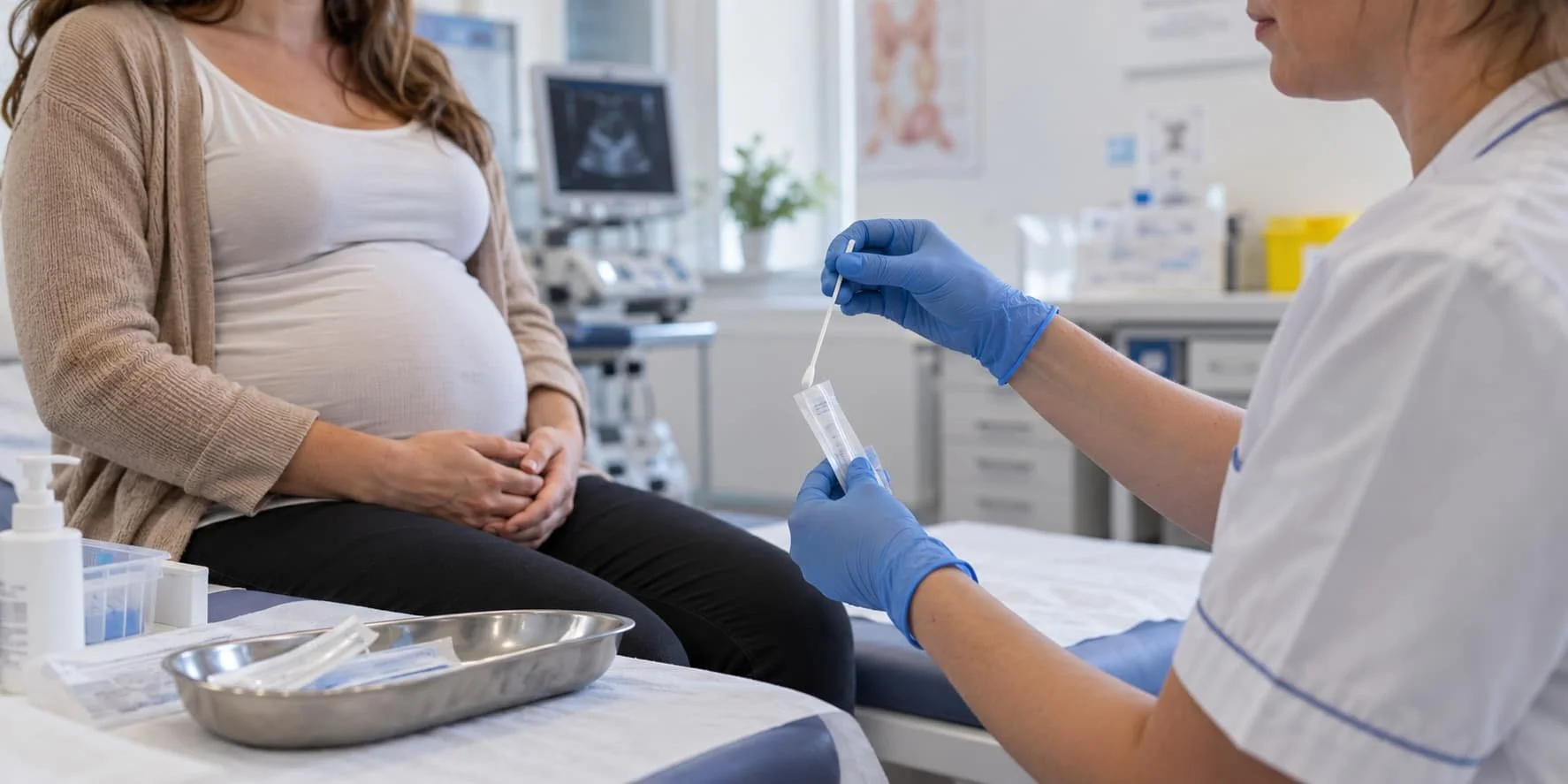
GBS can be detected with a swab from the vagina and the area around the anus.
In many Austrian practices, screening is offered towards the end of pregnancy, often around 35 to 37 weeks. Some Vienna maternity practices describe GBS screening during the 35th to 38th week.
The exact approach can differ between practices and maternity units.
It is worth knowing that a GBS swab is not one of the five standard pregnancy examinations listed in Austria's Eltern-Kind-Pass. The official Austrian health portal lists five routine obstetric examinations during pregnancy, with the final one taking place between 35 and 38 weeks. Additional examinations can be offered when medically appropriate or based on professional recommendations.
This can sometimes be confusing for international women living in Vienna because GBS screening practices differ between countries.
For example, some countries routinely screen all pregnant women, while others use a risk-based approach. Your Austrian obstetrician or midwife can explain what is recommended for your individual pregnancy and where you plan to give birth.
What does a positive GBS result actually mean?
A positive result generally means that GBS was detected in the sample.
It does not necessarily mean you have an infection.
This distinction is important.
There is a difference between carrying GBS, known as colonisation, and having an active GBS infection.
If GBS is found on a vaginal or rectal swab and you feel completely well, you are usually considered a carrier. You have not done anything wrong, and you do not need to feel embarrassed about the result.
You also did not catch GBS because of poor hygiene.
GBS is a naturally occurring bacterium that can be present in the bodies of healthy adults.
The main concern is what happens around the time of birth.
Does GBS harm the baby during pregnancy?
In most cases, no.
The biggest concern is early-onset GBS infection, which usually develops shortly after birth as a result of exposure around labour and delivery.
The NHS describes GBS as very common and says that most babies of women who carry GBS are healthy. The risk of a baby developing serious early-onset GBS infection is small, but it is taken seriously because the infection can become severe quickly.
Certain situations can increase the risk of a newborn developing GBS infection.
These include:
Premature birth
A prolonged period after the waters break
Fever or suspected infection during labour
Known GBS colonisation
GBS found in the urine during pregnancy
A previous baby who developed GBS infection
The Austrian neonatal sepsis consensus also identifies premature birth, prolonged rupture of membranes and maternal infection as important risk factors.
This is why your maternity team wants to know about a positive GBS result before labour begins.
Do you need antibiotics during pregnancy if you test positive?
Usually, a positive vaginal or rectal GBS swab does not mean that you need to take antibiotics for the rest of your pregnancy.
This is because antibiotics given before labour generally do not permanently eliminate GBS. The bacteria can return, which means treating colonisation weeks before birth may not provide the protection needed when the baby is actually exposed during labour.
Instead, the main strategy is usually antibiotic prophylaxis during labour, when it is indicated.
The purpose is not primarily to treat you. It is to reduce the chance that the bacteria will be passed to your baby during birth.
The RCOG explains that women who are known to carry GBS are offered antibiotics during labour, while GBS found in the urine requires treatment as a urinary infection as well as consideration of antibiotics during labour.
Your exact treatment plan should always come from your Austrian maternity team because management can depend on how GBS was detected and on your individual circumstances.
What happens when labour starts?
If you know that you are GBS positive, one of the most important things you can do is make sure your maternity team knows.
When labour starts, or if your waters break, contact the maternity unit or healthcare professional according to the instructions you were given.
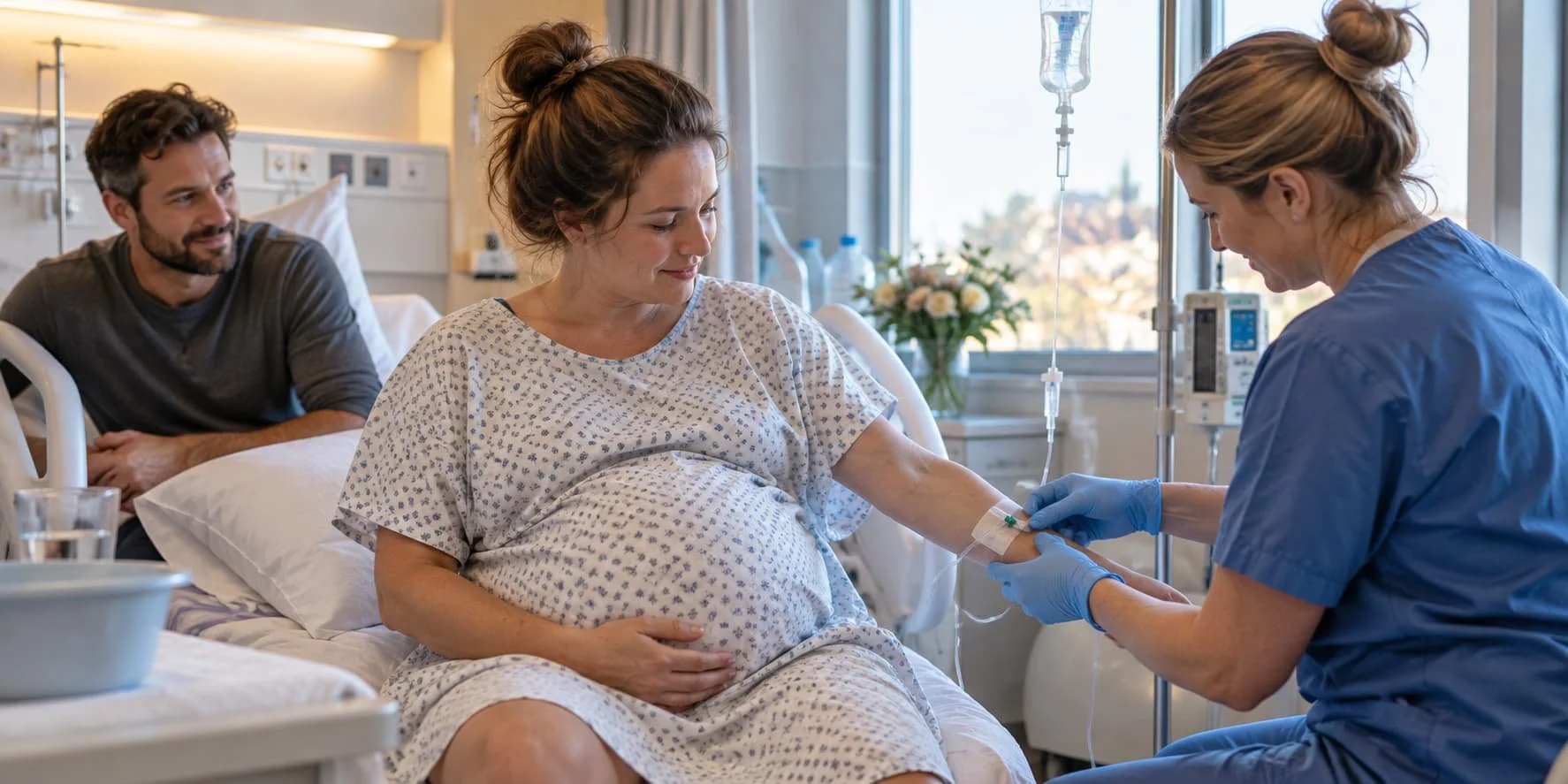
If antibiotics are recommended, they are generally administered intravenously during labour.
The antibiotic is given through a small cannula placed into a vein, usually in your hand or arm.
The aim is to have the antibiotic circulating in your body during the period when the baby is most likely to be exposed to GBS.
The Austrian and German-speaking obstetric guidance supports intrapartum antibiotic prophylaxis in relevant GBS risk situations, particularly in the context of preterm birth.
The specific antibiotic depends on your circumstances and any known allergies.
Penicillin is commonly used when appropriate, while alternative antibiotics can be considered if someone has a penicillin allergy.
Does having GBS mean you need a caesarean?
No.
A positive GBS test by itself does not mean that you need a caesarean birth.
If there are no other medical reasons for a caesarean, having GBS does not prevent you from planning or having a vaginal birth.
The purpose of knowing your GBS status is to allow your maternity team to take precautions during labour.
This is an important distinction because a positive GBS result can sometimes make women feel as though their birth plans have suddenly changed.
In most cases, GBS does not determine the position you give birth in, whether you use pain relief, whether your partner can be present or whether you have a vaginal birth.
Your other pregnancy and labour circumstances will determine those things.
Can you still have a natural birth if you are GBS positive?
Yes.
If by "natural birth" you mean a vaginal birth with minimal medical intervention, GBS alone does not automatically prevent this.
You can still discuss your preferences for movement, different birth positions, breathing techniques, pain relief options, your birth environment and your support people with your maternity team.
The main difference is that you may be offered intravenous antibiotics during labour.
Depending on where you plan to give birth in Vienna, your maternity team can explain how antibiotics are administered and how this may fit into your preferred way of labouring.
It can be useful to discuss this before labour rather than trying to work everything out when contractions are already strong.
Ask your midwife or obstetrician:
Where will the IV cannula be placed?
Can I still move around?
Can I use the shower or birth pool?
Can I change positions?
How often will the antibiotic be given?
What happens if labour progresses quickly?
What happens if my waters break before contractions begin?
Knowing the answers can make the situation feel much less intimidating.
What if your waters break before labour?
If you are GBS positive and your waters break before contractions begin, contact your maternity unit or healthcare provider promptly.
Do not simply wait at home without checking what your particular maternity team recommends.
The timing of delivery and antibiotics can depend on your gestational age, whether labour has started, whether there are signs of infection and other individual factors.
This is particularly important if your waters break before 37 weeks.
The Austrian guidance on preterm birth recommends intrapartum antibiotic prophylaxis when a woman has a positive or unknown GBS status in the context of preterm birth.
Your maternity team will tell you what to do based on your situation.
What if GBS is found in your urine?
This is slightly different from simply testing positive on a vaginal or rectal swab.
If GBS is found in your urine during pregnancy, it may indicate a higher level of bacterial colonisation and may also represent a urinary tract infection.
If you have a GBS urinary tract infection, your doctor will generally treat the infection during pregnancy with an appropriate antibiotic.
You may also be advised to receive antibiotic prophylaxis during labour.
This is why it is useful to know exactly where GBS was detected when someone tells you that you have tested positive.
A positive vaginal swab and GBS found in urine are not necessarily managed in exactly the same way.
Will you need antibiotics after the birth?
Not necessarily.
If antibiotics were given during labour specifically to reduce the risk of GBS transmission to your baby, they are not usually continued simply because you were a GBS carrier.
Your baby may receive additional assessment or monitoring depending on the circumstances of the birth.
The medical team will consider factors such as whether you received antibiotics, how long they were given before birth, whether your baby was born prematurely and whether either of you developed signs of infection.
What happens to the baby after birth?

Most babies whose mothers carry GBS are healthy.
If you have tested positive, the maternity and newborn teams will be aware of the result and can monitor your baby appropriately.
In many cases, a healthy baby does not need antibiotics simply because the mother tested positive.
However, the approach can change if the baby develops symptoms or if there are additional risk factors.
Signs of possible newborn infection can include:
Difficulty breathing
Grunting or unusual breathing sounds
Poor feeding
Unusual sleepiness or difficulty waking
Fever or an unusually low temperature
Changes in skin colour
Being unusually floppy
A significant change in behavior
If you notice something that concerns you after leaving hospital, seek medical advice promptly.
Newborn infections can become serious quickly, so it is better to ask for advice when you are worried.
Does GBS affect breastfeeding?
No.
Having GBS does not mean that you cannot breastfeed your baby.
If your baby is healthy and breastfeeding is going well, you can generally breastfeed as planned.
The presence of GBS in the birth canal does not mean that you need to stop breastfeeding.
If your baby requires treatment or observation after birth, your midwife, lactation consultant or neonatal team can help you maintain feeding and milk production while your baby receives the care they need.
Can GBS come back in a future pregnancy?
Yes.
Because GBS colonisation can change over time, testing positive during one pregnancy does not necessarily mean you will always carry GBS.
Likewise, testing negative at one point does not mean you could never carry it later.
If you have had a previous baby who developed a GBS infection, make sure your obstetrician and midwife know.
A previous affected baby is an important risk factor when planning care for a subsequent pregnancy.
If you were simply GBS positive in a previous pregnancy but your baby was healthy, your healthcare team can discuss what approach is appropriate during your current pregnancy.
What should you do if you are GBS positive in Vienna?
If you are receiving maternity care in Vienna, there are a few practical things you can do once you receive a positive result.
Keep your result easily accessible
Make sure your obstetrician, midwife and planned maternity hospital know about the result.
If the result is documented in your pregnancy records, take those records with you when you go to hospital.
Austria's official health portal recommends carrying your Eltern-Kind-Pass because it contains important pregnancy and health information that can help healthcare professionals, including in emergencies.
Ask your maternity unit about its protocol
Different hospitals may organise labour care slightly differently.
If you are planning to give birth in Vienna, ask your chosen maternity unit:
When should I call if labour starts?
When should I come to hospital?
What should I do if my waters break?
How will the antibiotics be administered?
Can I continue moving around during labour?
Can I use a birth pool or shower?
What monitoring will my baby receive after birth?
These questions can give you a much clearer picture of what to expect.
Tell your birth partner
Your partner should also know that you are GBS positive.
This does not mean they need to worry. It simply means they can help you remember to mention it when you arrive at the maternity unit.
Having someone who knows your birth preferences and understands your medical considerations can be reassuring.
Can a doula support you if you are GBS positive?
Absolutely.
A doula does not diagnose GBS, prescribe antibiotics or make medical decisions.
What a doula can do is help you feel prepared for how the diagnosis may fit into your birth preferences.
For example, you may be worried that needing an IV during labour means you will have to stay in bed. You may be wondering whether you can still use movement, breathing techniques, different positions or other comfort measures.
A doula can help you prepare questions for your medical team, understand the practical implications of your birth plan and provide emotional support before and during labour.
That can be particularly helpful if you are an international woman giving birth in Vienna and are navigating the Austrian maternity system in a language that is not your first language.
About Mona Alkhelewi, Birth and Postpartum Doula in Vienna
Mona Alkhelewi is a birth and postpartum doula based in Vienna who supports international women during pregnancy, birth and the postpartum period.
Mona works in both English and German, which can be especially valuable for international families preparing to give birth in Austria. Her prenatal support includes birth and postpartum planning, partner preparation and helping families feel more informed and confident about their choices.
If you have received a positive GBS result, Mona's role is not to tell you whether you should accept antibiotics or make medical decisions on your behalf. Those decisions belong with your obstetrician, midwife and maternity team.
Her role can instead be about helping you process the information, prepare questions, think through your preferences and feel supported if your birth involves an intervention you had not originally expected.
Mona's approach is particularly focused on helping women understand their options and feel confident in their own decisions rather than telling them what they should do.
For someone preparing for birth in Vienna, that kind of continuous emotional and practical support can make a difference, especially when pregnancy information becomes overwhelming.
Frequently Asked Questions About GBS in Pregnancy
-
For most pregnant women, GBS is not dangerous and causes no symptoms. The main concern is the possibility of the bacteria being passed to the baby during labour and causing a serious newborn infection.
-
Your maternity team will document the result and discuss how it affects your birth plan. Depending on your circumstances, you may be offered antibiotics during labour to reduce the risk of passing GBS to your baby.
-
Usually, a positive vaginal or rectal swab does not mean you need antibiotics immediately during pregnancy. Antibiotics are generally used during labour when indicated because treating colonisation earlier does not reliably prevent GBS from being present again at birth.
If GBS is found in your urine, the situation can be different and your doctor may recommend treatment during pregnancy.
-
Yes. GBS positivity by itself does not mean you need a caesarean section. Many women who carry GBS have uncomplicated vaginal births.
-
Yes. You can discuss your preferences for movement, breathing, positions and pain relief with your maternity team. You may need an IV for antibiotics, but this does not automatically mean you must remain in bed.
-
This depends on the maternity unit and your individual circumstances. Ask your chosen hospital in Vienna about its policy on water immersion and birth when intravenous antibiotics are recommended.
-
Contact your maternity team promptly and tell them that you are GBS positive. They will advise you when to come in and what should happen next based on your gestational age and other circumstances.
-
No. Most babies born to mothers who carry GBS do not develop an infection. Antibiotics during labour, when indicated, are used to reduce the already small risk of serious early-onset infection.
-
GBS positivity does not normally prevent you from breastfeeding. If your baby needs additional monitoring or treatment, your maternity and newborn care team can help you continue feeding or expressing milk.
-
Not necessarily. GBS colonisation can change over time. If you have previously tested positive or had a baby affected by GBS, tell your obstetrician and midwife so they can plan appropriate care.
Final thoughts
Testing positive for GBS during pregnancy can initially feel like one more thing to worry about, particularly when you are already thinking about labour, your birth plan and the health of your baby.
But a positive result is not a prediction that something will go wrong.
For most women, GBS is simply a piece of information that helps the maternity team plan for birth.
If you are pregnant in Vienna, talk to your obstetrician or midwife about exactly what your result means, whether antibiotics during labour are recommended for you, what to do if your waters break and how your chosen maternity hospital manages GBS.
You can still have preferences about your birth. You can still ask questions. You can still prepare for a positive and empowering experience.
And if your plans need to change, having people around you who understand your wishes can make those changes feel much easier to navigate.
A GBS-positive result does not define your pregnancy or your birth. It is simply one piece of information that your care team can use to help keep you and your baby safe.
Medical disclaimer
This article is for general educational purposes only and does not replace individual medical advice. GBS management can vary depending on how the bacteria were detected, your gestational age, your medical history, your previous pregnancies and the policies of your maternity unit. If you test positive for GBS, speak with your obstetrician, midwife or maternity hospital about your individual care plan. If your waters break, you develop a fever, experience unusual bleeding, notice reduced fetal movements or have another urgent concern, contact your maternity care team promptly.
Sources and further reading
Austrian Federal Ministry of Social Affairs, Health, Care and Consumer Protection, Consensus paper on prevention, diagnosis, treatment and follow-up of sepsis, including neonatal GBS risk factors.
Mona Alkhelewi, Birth and Postpartum Doula Services in Vienna.