What happens when labour is induced, and how long does it take?
When labour is induced, medication or a medical device is used to help the cervix soften and open and encourage contractions to begin. Depending on your pregnancy and how ready your cervix is, the process may involve prostaglandins, a balloon catheter, breaking the waters or an oxytocin drip. Your baby's heartbeat and contractions may be monitored throughout. An induced labour can take several hours or sometimes a day or longer. The exact process depends on your medical circumstances and the method recommended by your maternity team.
Being told that your labour may need to be induced can bring up a lot of questions. You might wonder why it is being recommended, whether it will be painful, how long it will take or whether you will still be able to have the birth experience you had imagined.
If you are planning to give birth in Austria, particularly in Vienna, it helps to understand what labour induction involves and what may happen once you arrive at the hospital. Although the basic medical principles are similar, the exact process can vary depending on your maternity unit, your pregnancy and the reason induction has been recommended.
Labour induction is a way of starting labour artificially when it has not begun on its own. It may be recommended because continuing the pregnancy could carry greater risks for you or your baby. Sometimes it is planned because you have reached a certain point in pregnancy, while in other situations it becomes necessary because of a medical concern.
An induction does not always mean that your baby will arrive within a few hours. The process can take time, particularly if your cervix is not yet ready for labour. Knowing what to expect can help you feel more prepared and confident when discussing your options with your maternity team.
What Happens If Your Labour Is Induced?
When labour is induced, your maternity team uses medication or a mechanical method to help your cervix prepare for birth and encourage contractions to begin. Depending on your situation, this may involve a hormone-based vaginal preparation, a balloon catheter, breaking the waters or an oxytocin drip. You and your baby may be monitored during the process, and induction can take several hours or sometimes longer. The method and timing depend on your pregnancy, your cervix and the reason induction is recommended.
Why Might Labour Be Induced?
In an uncomplicated pregnancy, labour usually begins naturally when your body and baby are ready. However, there are circumstances in which your doctor may recommend starting labour rather than waiting.
The decision is based on weighing the potential benefits of birth against the risks of continuing the pregnancy. Some common reasons include the following.
Going beyond your due date
A due date is an estimate, not a deadline. Many babies arrive before or after the estimated date.
However, as pregnancy continues beyond the due date, your maternity team may discuss induction with you. In Austria, induction may be recommended when the pregnancy has continued more than ten days beyond the estimated due date, although the timing should be considered in the context of your individual circumstances and local hospital guidance.
Your doctor may discuss the condition of your placenta, your baby's wellbeing and whether continued monitoring is appropriate.
High blood pressure or pre-eclampsia
High blood pressure during pregnancy sometimes requires closer medical attention. If you develop pre-eclampsia or another condition that creates a significant risk for you or your baby, your doctor may recommend delivering your baby sooner.
The timing depends on how far along you are, how severe the condition is and how you and your baby are doing. In some situations, induction may be suitable. In others, a caesarean birth may be recommended.
Diabetes during pregnancy
Some women with diabetes during pregnancy may be advised to consider induction, particularly if there are concerns about their health or the baby's wellbeing.
The decision depends on factors such as blood glucose control, the baby's growth and any additional complications. Having gestational diabetes does not automatically mean that you will need an induced birth.
Your waters break but contractions do not begin
Sometimes the waters break before labour starts. This is known as prelabour rupture of membranes.
If contractions do not begin naturally, your maternity team may discuss induction because the risk of infection can increase as time passes after the waters have broken.
Your gestational age, the colour and smell of the fluid, your temperature and your baby's condition will all be considered. If your waters break, contact your maternity unit for advice rather than waiting at home for contractions to start.
Concerns about your baby's wellbeing
If monitoring or other assessments raise concerns about your baby's wellbeing, your doctor may recommend that the baby is born sooner.
The recommendation will depend on what the tests show and how urgent the situation is. Induction may be an option if vaginal birth is considered appropriate and there is enough time for the process. If a faster birth is needed, a caesarean may be safer.
What Happens Before Labour Induction Begins?

Before induction starts, your maternity team will assess your pregnancy and explain why they are recommending it.
You should have an opportunity to ask questions about the reason, possible benefits, risks and alternatives. If the situation is not urgent, you can usually take time to understand the recommendation and discuss your preferences.
The team may check your blood pressure, temperature and general health. They may also monitor your baby's heartbeat using cardiotocography (CTG), which records the baby's heart rate and uterine activity.
One important part of the assessment is checking whether your cervix is ready for labour.
Your doctor or midwife may offer a vaginal examination to assess whether the cervix has softened, shortened and started to open. They may use the findings to calculate a Bishop score, which helps assess how favourable the cervix is for induction.
If the cervix is already soft and beginning to open, the next steps may be different from those used when it is still firm and closed.
This assessment helps the team choose a suitable induction method.
What Are the Different Methods of Labour Induction?
There is no single method used for every woman. Your maternity team will choose an approach based on your cervix, medical history, pregnancy and the reason for induction.
1. Prostaglandins to prepare the cervix
If your cervix is not yet ready for labour, medication containing prostaglandins may be used to help it soften, shorten and begin opening.
These preparations are usually placed in the vagina, although the exact product and method depend on the hospital's protocol.
After the medication is given, the team may monitor you and your baby to see how your body responds. You might experience period-like cramps, tightening or contractions. Sometimes the cervix changes without strong contractions starting immediately.
The medication may need time to work, and further doses or another method may be considered depending on your response and the hospital's protocol.
2. A balloon catheter
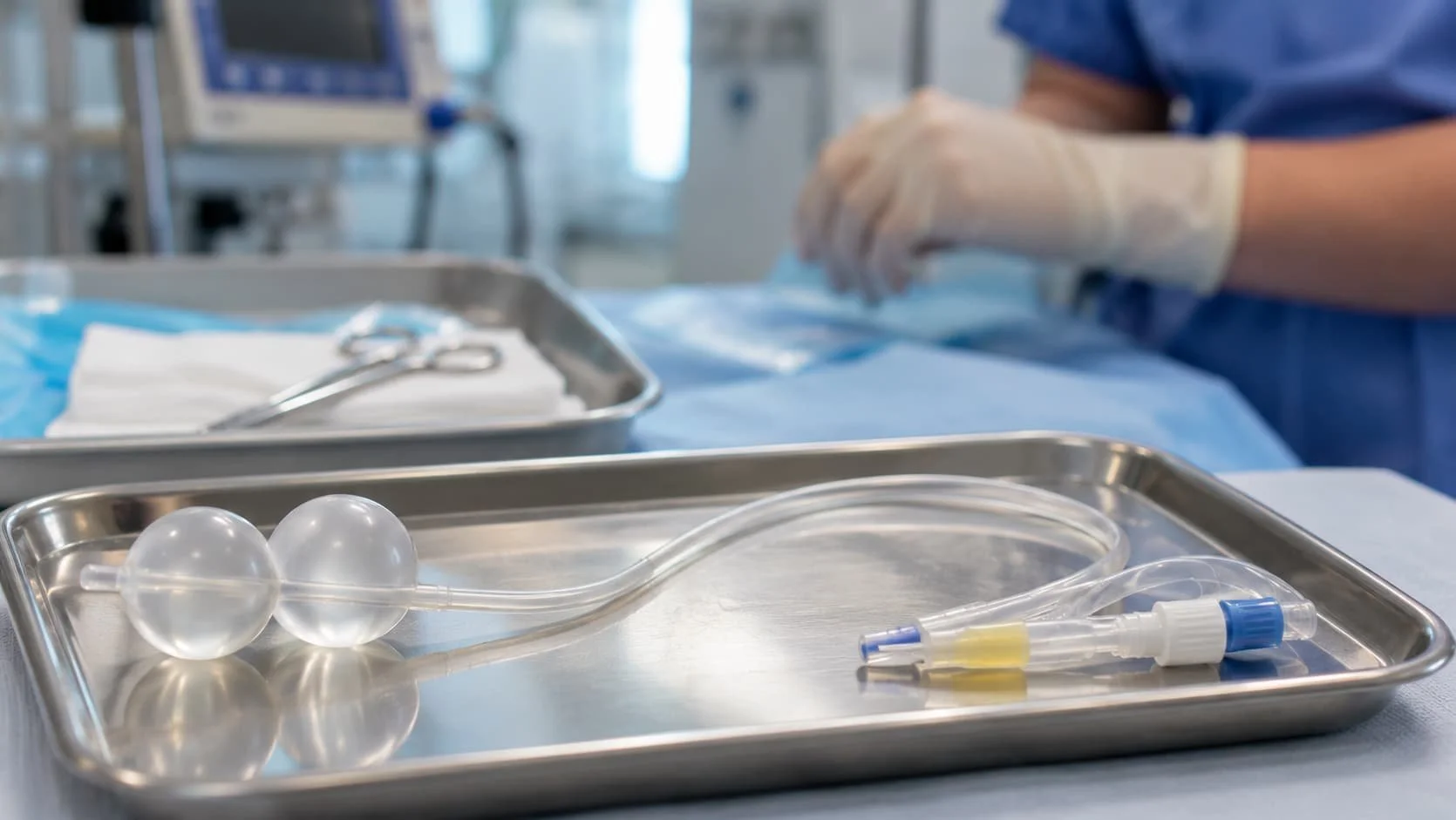
A balloon catheter is a small tube with a balloon at its end. A healthcare professional gently places it through the cervix and fills the balloon with sterile fluid.
The pressure helps encourage the cervix to open and become more favourable for labour.
You may feel discomfort or cramping when it is inserted. Some women find the sensation similar to strong menstrual cramps, while others experience more noticeable discomfort.
The balloon may remain in place for several hours. It can fall out once the cervix has opened sufficiently, or it may be removed by the maternity team.
A balloon catheter is a mechanical method rather than a medication-based one. Your doctor can explain whether it is suitable for your situation.
3. Breaking the waters
If your cervix has opened enough and the baby's head is in a suitable position, your doctor or midwife may recommend artificially breaking the waters. The medical term for this is amniotomy.
A small instrument is used to make an opening in the amniotic sac. You may feel pressure or discomfort during the examination, but the procedure itself should not be painful in the way a contraction is.
Once the waters have been broken, contractions may begin or become stronger. If they do not start adequately, an oxytocin infusion may be recommended.
Amniotomy is not appropriate in every situation. Your maternity team will assess whether it is suitable and explain the reason for suggesting it.
4. An oxytocin drip
Oxytocin is a hormone that causes the uterus to contract. A synthetic form can be given through an intravenous drip to encourage contractions.
The dose is usually increased gradually according to your response and the hospital's protocol. The aim is to establish an effective pattern of contractions while monitoring you and your baby.
Because contractions can become strong or frequent, CTG monitoring is commonly used during an oxytocin infusion.
You may have a cannula in your hand or arm for the drip. Ask your team whether you can still move around, change positions or use the bathroom with the equipment in place.
How Long Does an Induced Labour Take?
One of the biggest surprises for many women is that an induction can take longer than expected.
If your cervix is already soft and beginning to open, labour may establish relatively quickly. If your cervix is still firm and closed, it may take many hours of preparation before contractions become regular and effective.
For some women, the process takes most of a day. For others, it can continue into the following day or longer. The timing depends on the method used, how your body responds and whether additional steps are needed.
It is also important to understand that starting induction is not the same as starting active labour. The early stages may involve preparing the cervix, waiting for medication to work or assessing whether contractions are becoming effective.
Try not to compare your progress with someone else's experience. An induction that takes longer is not automatically a sign that something is wrong.
Your maternity team should explain what is happening, what they are waiting for and when they will review the plan.
Is Induced Labour More Painful Than Natural Labour?
This is a common concern, and it is understandable to wonder whether induced contractions will feel different.
Some women experience induced contractions as more intense or closer together, particularly when oxytocin is used. The pattern can feel different from contractions that build gradually during spontaneous labour.
However, pain is personal. Your experience will depend on the induction method, how quickly contractions develop, your baby's position, your emotional state and other factors.
You can discuss pain relief options with your maternity team before induction begins. Depending on your circumstances and the hospital's facilities, options may include:
Breathing and relaxation techniques.
Changing positions and gentle movement.
Massage or counter-pressure from your birth partner or doula.
Warm water or a shower, if permitted.
Gas and air, where available.
Other medication offered by your maternity team.
You do not have to decide on every pain relief option in advance. It is helpful to know what is available so you can make choices as labour progresses.
What Monitoring Should You Expect During Induction?

Monitoring is an important part of an induced labour because the team needs to understand how your body is responding and how your baby is coping.
You may have CTG monitoring to record your baby's heartbeat and contractions. The length and frequency of monitoring depend on the induction method and your clinical situation.
With an oxytocin infusion, continuous monitoring is commonly recommended because the contractions can become too frequent or too strong. This allows the team to identify changes that may require an adjustment to the infusion or further assessment.
You may also have regular checks of your blood pressure, pulse and temperature. Vaginal examinations may be offered to assess cervical changes, although the frequency should be appropriate to your circumstances.
Ask your team what monitoring is planned and whether you can move around between checks. Some hospitals have wireless monitoring equipment, but availability varies.
Can You Still Have the Birth Experience You Planned?
Being offered an induction does not mean that all your birth preferences have to be put aside.
You may still be able to use breathing techniques, change positions, have your partner beside you and receive continuous emotional support. You can also discuss preferences such as delayed cord clamping, skin-to-skin contact and feeding your baby after birth, where medically appropriate.
Some practical details may change. For example, an oxytocin drip or continuous CTG monitoring can affect how freely you move around. Your team can explain what is possible with the equipment and monitoring being used.
It may help to think about your birth preferences as a guide rather than a fixed script. You can decide which parts are most important to you and discuss how they might be accommodated during an induced birth.
If something changes during labour, you can ask the team to explain what is happening and why a different approach is being recommended.
What Are the Risks of Labour Induction?
Like any medical intervention, induction has potential benefits and risks. These depend on the reason for induction, your pregnancy and the method being used.
Possible considerations include:
Contractions that are too frequent or strong: Medication can sometimes overstimulate the uterus, which may affect your baby's heart rate.
Changes in the baby's heart rate: Your baby may show signs of not tolerating the contractions well, requiring adjustments to the induction or further intervention.
More monitoring and procedures: Induction can involve vaginal examinations, CTG monitoring, medication and an intravenous line.
Infection concerns: This is particularly relevant when the waters have broken and labour has not started.
An unsuccessful induction: Sometimes the cervix does not respond as expected or labour does not progress. Your team may recommend another method, more time or a caesarean birth.
A serious complication such as uterine rupture is uncommon but can be a concern in certain circumstances, particularly for women with a previous caesarean or uterine surgery. Your medical history should be considered before choosing an induction method.
Induction is not automatically safer or riskier than waiting. The decision should be based on your individual circumstances and a discussion of the likely benefits and disadvantages.
What Questions Should You Ask Before Agreeing to Induction?
If induction has been recommended and there is no immediate emergency, you can ask for a clear explanation before deciding.
Useful questions include:
Why are you recommending induction in my situation?
What are the benefits of starting labour now?
What are the risks of waiting?
Is there time for monitoring and reassessment before deciding?
Which induction method do you recommend, and why?
What happens if the first method does not work?
How will my baby be monitored?
Will I be able to move around during labour?
What pain relief options are available?
At what point would you recommend a caesarean birth?
You can also ask whether your partner can remain with you throughout the process and whether a doula can be present, according to the hospital's rules.
The aim is not to challenge every recommendation. It is to understand the plan and feel involved in decisions about your care.
How Mona Alkhelewi Can Support You Through an Induced Birth
Being told that you may need an induction can bring up emotions that you did not expect. You may feel disappointed if you had imagined labour starting naturally, worried about medical procedures or uncertain about how long the process will take.
Mona Alkhelewi is a birth and postpartum doula based in Vienna, supporting women in English and German. Her approach focuses on helping expectant mothers feel informed, prepared and emotionally supported throughout pregnancy, birth and the postpartum period.
If you are preparing for an induced birth, a doula can help you explore your birth preferences, prepare questions for your medical team and think through comfort measures that may be useful during labour. She can also offer reassurance and practical support to your birth partner.
Mona's work includes pregnancy and birth preparation, as well as individual sessions focused on preparing the body for birth. Her support is available in person in Vienna and virtually.
A doula does not recommend, prescribe or carry out medical induction procedures. Decisions about whether and how to induce labour belong to you and your medical team. A doula's role is to support you emotionally and practically, helping you feel heard and more confident as you navigate the experience.
Frequently Asked Questions
-
You will usually have an assessment of your health, your baby's wellbeing and your cervix. Depending on how ready your cervix is, the team may use medication or a balloon catheter to prepare it. You may then be monitored while waiting for changes or contractions to begin.
-
It varies. Some women develop contractions within a few hours, while others need cervical preparation and additional methods before labour becomes established. The process can take a day or longer, particularly if the cervix is not ready at the beginning.
-
Induced contractions can feel stronger or come closer together for some women, especially with oxytocin. However, experiences differ. Pain relief options should be discussed with your maternity team before and during labour.
-
You have the right to receive information and be involved in decisions about your care. If induction is recommended, ask why it is being suggested, what the benefits and risks are, and what may happen if you wait. In an emergency, the team will explain the urgency and available options as clearly as possible.
-
Often, yes, but it depends on the induction method, monitoring requirements and your medical situation. A balloon catheter may allow more movement than an oxytocin infusion with continuous monitoring. Ask your maternity team what is possible at your hospital.
-
No. Many women give birth vaginally after induction. A caesarean may be recommended if induction does not lead to labour progressing, if there are concerns about your or your baby's wellbeing, or if vaginal birth is no longer considered the safest option.
-
Your team will review your condition, your baby's wellbeing and how your cervix has responded. Depending on the circumstances, they may recommend waiting longer, trying another method or proceeding with a caesarean birth. The next step should be discussed with you.
-
An epidural may be available during induced labour, depending on your medical situation and the hospital's facilities. You do not have to wait until contractions reach a particular intensity to ask about pain relief. Discuss the timing and options with your maternity team.
-
Your birth partner can usually provide support, subject to the maternity unit's visiting and support-person policies. Whether a doula can remain with you throughout the induction depends on the hospital's rules and available space. Check this with your chosen hospital before admission.
-
It may be discussed when a pregnancy continues beyond the estimated due date. Austrian guidance describes induction as one option when the due date has been exceeded by more than ten days. The timing is individual, so ask your obstetric team about the recommendations for your pregnancy.
Final Thoughts
Hearing that your labour may need to be induced can feel like a big change to the plans you had made. But understanding the process can help you approach the decision with more confidence.
Induction may involve preparing the cervix, using a balloon catheter, breaking the waters or giving oxytocin through a drip. The process can take time, and your experience will depend on your body, your pregnancy and the method used.
If you are giving birth in Vienna, ask your chosen maternity team to explain its induction process, monitoring arrangements and pain relief options. Make sure you understand why induction is being recommended and what alternatives may be appropriate in your circumstances.
You can still ask questions, express your preferences and receive emotional support throughout the experience. An induced birth is still your birth, and you deserve to feel informed, respected and supported at every stage.
Sources Used
Austrian Ministry of Social Affairs, Health, Care and Consumer Protection: Birth: Supportive Measures and Induction Methods
https://www.gesundheit.gv.at/leben/eltern/geburt/unterstuetzende-massnahmen.htmlAustrian Ministry of Social Affairs, Health, Care and Consumer Protection: Birth Process
https://www.gesundheit.gv.at/leben/eltern/geburt/ablauf.htmlGeburtsinfo Wien: The Opening Phase of Labour
https://geburtsinfo.wien/alles-zur-geburt/geburtsvorgang/die-eroeffnungs-phase/National Institute for Health and Care Excellence: Inducing Labour
https://www.nice.org.uk/guidance/ng207World Health Organization: WHO Recommendations for Induction of Labour
https://www.who.int/publications/i/item/9789241501156National Health Service: Inducing Labour
https://www.nhs.uk/pregnancy/labour-and-birth/induction/Mona Alkhelewi: Birth and Postpartum Doula in Vienna
https://www.monaalkhelewi.com/