Preparing your hospital bag is one of those small pregnancy tasks that can make the final weeks before birth feel much more manageable. Once everything is packed and ready, you can spend less time wondering what you might have forgotten and more time focusing on the arrival of your baby.
If you are planning to give birth in Austria, especially in Vienna, there are a few things worth knowing before you start packing. Hospitals do not all provide the same items. Some maternity units supply nightwear, maternity pads and baby clothes during your stay, while others expect you to bring more of your own essentials. Your length of stay and whether you are planning an inpatient or outpatient birth will also affect what you need.
The aim is not to pack your entire home into a suitcase. It is to have the documents, clothing, toiletries and baby essentials you are likely to need, with a few personal comforts to help you feel at ease.
What Should You Pack in Your Hospital Bag for Birth in Austria?
If you are giving birth in Austria, pack your Eltern-Kind-Pass, e-card, photo ID, any hospital registration documents, comfortable clothes, toiletries, maternity or nursing bras, and essentials for your baby’s journey home. You should also bring your birth preferences, prescribed medication and a phone charger. Check your chosen maternity hospital’s own list because items such as nappies, maternity pads, nightwear and baby clothes may be provided during your stay.
When Should You Pack Your Hospital Bag?
It is sensible to have your hospital bag ready by around the 36th or 37th week of pregnancy. If you are expecting twins, have a higher-risk pregnancy or have been told that your baby may arrive early, your midwife or doctor may suggest preparing it sooner.
Babies do not always arrive on their due date. Having your bag ready a few weeks beforehand means you are not trying to find documents, wash baby clothes or buy toiletries when labour has already started.
You do not need to pack everything in one afternoon. Start with the essentials, then add the things you use every day as your due date approaches. Keep the bag somewhere easy to reach and let your birth partner know where it is.
For convenience, you may prefer to use two smaller bags rather than one large suitcase. One can contain the things you need for labour and admission, while the other holds clothing and toiletries for your hospital stay. Your partner can bring the second bag later if it is not needed immediately.
1. Important Documents to Pack
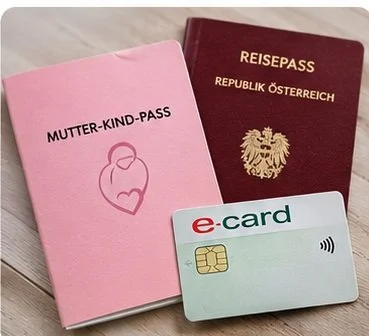
Documents are among the most important things to prepare, particularly if you are giving birth in a country where you may not have grown up or where German is not your first language.
Keep the following together in a folder or document wallet:
Eltern-Kind-Pass: This is the Austrian parent-child health record, formerly known as the Mutter-Kind-Pass. Bring it with you so the maternity team can refer to your pregnancy records.
e-card: Take your Austrian health insurance card if you have one.
Photo identification: A passport or other accepted official identification document.
Hospital registration documents: Bring any admission forms, booking confirmation or paperwork provided by your chosen maternity hospital.
Medical information: Include relevant test results, blood group information if available, allergy details and reports from other healthcare providers.
Birth preferences: If you have written down your preferences for labour and birth, bring a copy. It can help you communicate what matters to you.
Private insurance details: If you have private health insurance, bring your policy information or membership details if requested by the hospital.
If you have recently moved to Vienna, it is particularly useful to check with the hospital in advance about the documents it expects. Ask whether any paperwork needs to be completed before admission and whether you should bring original documents or copies.
Keep your documents somewhere you can find them quickly. You do not want to be searching through several bags when it is time to leave.
2. What to Pack for Labour and Birth
You may spend several hours in the hospital before your baby is born, so a few comfortable and familiar items can make a difference.
You do not need special clothing for labour. Choose things that allow you to move freely and that you will not mind getting wet or dirty.
Comfortable clothing
An old, loose T-shirt, a nightdress or a comfortable top can be useful during labour. Some women prefer to wear a hospital gown, while others feel more comfortable in their own clothes. Choose whatever helps you feel relaxed and allows easy access for examinations or monitoring when needed.
Slippers and warm socks
Bring slippers that are easy to put on and take off. A pair with a non-slip sole is useful when walking around the maternity unit. Warm socks are also worth packing because your feet may feel cold during labour.
A dressing gown or cardigan
A lightweight dressing gown or cardigan can be useful when walking around the hospital or when you want an extra layer. Hospital rooms can feel warm or cool depending on the building and the time of year.
Hair ties and clips
If you have long hair, pack a few hair ties or clips to keep it away from your face. It is a small item, but you may appreciate having it when you are concentrating on contractions.
Lip balm and a water bottle
Your lips and mouth may feel dry during labour. Lip balm can be comforting, and a reusable water bottle makes it easier to drink between contractions. A bottle with a straw can be especially convenient if you prefer not to sit up each time you take a sip.
Personal comfort items
You might want to bring a small speaker or headphones for music, a familiar pillowcase, massage oil or a heat pack if your hospital allows it. These are optional rather than essential. Check with your maternity unit before bringing equipment such as a TENS machine or anything that needs to be plugged in.
You can also pack a few easy-to-eat snacks for yourself and your birth partner. Ask your maternity team about the hospital's food and drink guidance during labour, as recommendations can depend on your circumstances and planned care.
3. Clothing and Toiletries for Your Hospital Stay
After the birth, you will probably want clothing that feels soft, comfortable and easy to change. You may also appreciate having your own toiletries rather than relying on whatever is available in the hospital.
Consider packing:
Two or three comfortable nightdresses or pairs of pyjamas.
A dressing gown or cardigan.
Two or three comfortable bras, including nursing bras if you plan to breastfeed.
Loose underwear or disposable maternity underwear.
Comfortable clothes for going home.
Slippers and shower sandals.
A small towel, if your hospital asks you to bring one.
A laundry bag for worn clothing.
Front-opening nightwear can make breastfeeding and skin-to-skin contact easier. You may also find loose clothing more comfortable if you have stitches or abdominal tenderness after birth.
For toiletries, pack your toothbrush, toothpaste, shampoo, conditioner, body wash, deodorant, hairbrush, face wash and moisturiser. Add any personal products you use regularly.
Maternity pads are useful after birth because vaginal bleeding, known as lochia, is normal during recovery. However, check whether your hospital provides them before buying several packs. The same applies to mesh underwear, towels and other recovery supplies.
If you wear contact lenses, bring your glasses as well. It may be easier to use them during labour and in the first days after birth.
4. What to Pack for Your Baby

One of the most exciting parts of preparing your hospital bag is choosing your baby's first clothes. It is easy to pack far more than you need, especially when baby clothes are so small.
For a straightforward hospital stay, you may only need a few essentials, particularly if your maternity unit provides clothing and nappies.
A useful starting list includes:
Two or three bodysuits.
One or two sleepsuits or baby outfits.
A soft cotton hat, depending on the hospital's guidance and the weather.
Socks or booties.
A soft blanket.
Muslin cloths.
An outfit for leaving the hospital.
Nappies and wipes, if your hospital asks you to bring them.
Choose clothing that is easy to put on and remove. Newborns need frequent changes, and complicated outfits can become frustrating when you are still getting used to dressing your baby.
Size 50 or 56 is commonly used for newborn clothing, but babies vary in size. You do not need to buy a large wardrobe before birth. A few simple outfits in each size are usually enough to begin with.
Do You Need to Bring Baby Clothes to an Austrian Hospital?
This is one of the most useful questions to ask your chosen maternity unit before packing.
Some Austrian hospitals provide baby clothing and nappies while you are staying as an inpatient. For example, St. Josef Hospital in Vienna states in its birth information that parents do not need to bring baby clothes for the hospital stay. Other hospitals provide different arrangements.
Even if your hospital supplies clothing during the stay, you will generally need an outfit for your baby's journey home. Check the hospital's current information rather than assuming that every maternity unit follows the same policy.
5. What Your Baby Needs for the Journey Home
Your baby will need suitable clothing for the journey home, whether you are travelling by car, taxi or another form of transport.
Choose an outfit based on the weather rather than packing several complicated layers. A bodysuit, sleepsuit, socks and a suitable outer layer may be enough, depending on the season.
If you are giving birth in Vienna during winter, pack a warm jacket or suitable outdoor layer, a hat and a blanket. In warmer months, lighter clothing may be more appropriate. Avoid overheating your newborn with too many layers.
If you are travelling by car, arrange an appropriate rear-facing infant car seat before the birth. It should be suitable for your baby's size and installed correctly. Do not plan to hold your baby in your arms during the journey, even if the drive is short.
If you are going home by taxi, make sure you have a safe way to transport your baby. Arrange this before your due date so that you are not trying to organise a car seat after the birth.
6. What Should Your Birth Partner Pack?
Your birth partner may be at the hospital for many hours, so it is worth preparing a small bag for them too.
Useful items include:
A change of clothes and a fresh T-shirt.
Comfortable shoes or slippers.
Phone and charger.
Toiletries and deodorant.
Snacks and a refillable water bottle.
Any medication they normally take.
Glasses or contact lenses, if needed.
Cash or a payment card for parking, food or other expenses.
A list of important phone numbers.
If your partner plans to support you during labour, they may also appreciate a small notebook with your birth preferences and any important information you have discussed together.
Think about practical arrangements as well. Who will drive to the hospital? Where will the car be parked? If you already have children, who will look after them when labour begins?
Having these details agreed in advance can prevent unnecessary stress.
7. Does Your Hospital in Vienna Provide Everything You Need?
Not necessarily. The items supplied during a hospital stay vary between maternity units, and the arrangements can differ between public and private hospitals.
Some hospitals provide nightgowns, maternity pads, baby clothing, nappies and other basic supplies for inpatient stays. Others ask parents to bring some or all of these items themselves.
For example, one private maternity department in Vienna lists items such as nightgowns, slippers and nursing bras as things to bring, while another explains that it provides nightwear, sanitary pads, mesh underwear and guest slippers during an inpatient stay.
This is why a generic hospital bag checklist should only be a starting point.
Before your due date, contact your chosen maternity hospital or check its official birth information. Ask:
Are nightgowns or hospital clothing provided?
Do I need to bring maternity pads and underwear?
Are nappies and baby clothes supplied during the stay?
Do I need to bring my own towels?
Is there anything specific I should bring for admission?
What should I prepare for an outpatient birth?
Are there any restrictions on personal items or equipment?
If you are planning to give birth in a public hospital in Vienna, check the information for that particular maternity unit. Do not assume that the arrangements at one hospital will be the same at another.
8. What If You Are Planning an Outpatient Birth in Austria?
Some parents in Austria choose an outpatient birth, meaning they plan to return home relatively soon after giving birth rather than staying in hospital for several days.
If this is your plan, you will still need your admission documents, comfortable clothing, toiletries and an outfit for your baby. However, you may not need as many changes of clothes or personal items as someone planning a longer inpatient stay.
The most important part is organising your follow-up care before the birth. Speak with your midwife and maternity team about the checks and support you and your baby will need after going home.
Make sure you know who to contact if you have concerns, how newborn checks will be arranged and what support will be available during the first days.
Your hospital may also have specific conditions that need to be met before an early discharge. Do not assume that you can leave at a particular time simply because you have planned an outpatient birth.
9. How to Keep Your Hospital Bag Organised
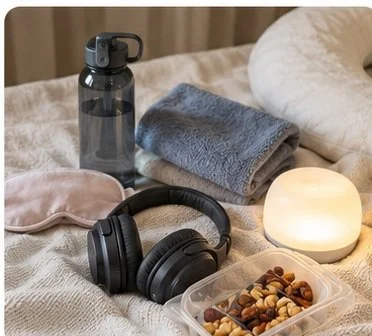
Once you have gathered everything, spend a little time organising it. You will be glad you did when you are tired and preparing to leave for hospital.
Use separate packing cubes or smaller bags for different categories. Keep documents in one easy-to-reach folder, labour essentials in a separate pouch and baby clothes together.
You could also prepare a small bag for items you will need immediately, such as your phone charger, water bottle, lip balm, documents and a change of clothes.
Keep a short list of things that cannot be packed until the last minute, such as your phone, glasses, everyday medication and keys. Put the list somewhere visible so that your birth partner can help check it before you leave.
Avoid bringing expensive jewellery, large amounts of cash or valuables that you do not need. Hospital space can be limited, and a smaller, organised bag is usually easier to manage.
How Mona Alkhelewi Can Help You Prepare for Birth in Vienna
Preparing for birth involves more than choosing a hospital and packing a suitcase. Many expectant parents also have questions about what to expect, how to communicate their preferences and how to feel more confident as labour approaches.
Mona Alkhelewi is a birth and postpartum doula based in Vienna, supporting women in English and German. Her work focuses on helping expectant mothers feel informed, prepared and supported throughout pregnancy, birth and the postpartum period.
As part of birth preparation, a doula can help you think through practical details such as what to bring to hospital, how to prepare your birth preferences, what your partner may need and how to organise support for the first days after birth.
For international families living in Vienna, having someone who understands the local birth environment and can communicate in their preferred language can be especially reassuring.
Mona's role is not to replace your midwife or medical team. Instead, she offers emotional and practical support, helping you prepare for the experience and feel more confident about the decisions ahead.
Frequently Asked Questions
-
It is a good idea to have your hospital bag ready by around 36 to 37 weeks of pregnancy. If you are expecting twins, have a higher-risk pregnancy or have been advised that your baby may arrive early, prepare it sooner. This gives you time to check your hospital's requirements and buy anything you still need.
-
You should generally bring your Eltern-Kind-Pass, e-card if you have one, photo ID and any hospital admission or registration documents. It is also useful to bring relevant medical reports, test results and private insurance details if applicable. Confirm the exact requirements with your chosen hospital.
-
Some hospitals provide nappies and baby clothing during an inpatient stay, while others may ask you to bring them. The arrangements vary between maternity units. Check your hospital's current checklist before packing. You will generally need an outfit for your baby's journey home.
-
Not always. Some maternity hospitals provide maternity pads and postpartum underwear during an inpatient stay. Others may expect you to bring your own. Ask your hospital what is included so that you do not pack unnecessary supplies.
-
For a winter birth, prepare a bodysuit, sleepsuit, socks, a warm outer layer, a suitable hat and a blanket for the journey home. The exact clothing will depend on the weather and how you are travelling. If travelling by car, make sure your baby has a suitable infant car seat.
-
Two or three basic outfits are a reasonable starting point if your hospital asks you to bring baby clothes. You will also need an outfit for going home. Some hospitals supply clothing during the stay, so check before packing several changes.
-
Your birth partner should bring a change of clothes, phone and charger, toiletries, snacks, drinks and any regular medication. It is also useful to have cash or a payment card for parking and food. If they will be supporting you throughout labour, comfortable shoes are worth bringing.
-
If you are travelling by car, your baby needs an appropriate infant car seat, including when travelling by taxi. If you are walking or using public transport, you may not need a car seat for that particular journey, but you should still plan a safe and practical way to carry your newborn.
-
You may need fewer changes of clothing because you plan to return home sooner. However, you still need your documents, personal essentials and your baby's going-home outfit. More importantly, arrange your midwife follow-up and postnatal support before the birth, and check the hospital's discharge requirements.
-
It depends on your maternity hospital. Some provide nightgowns, towels or other basic items during an inpatient stay, while others ask you to bring your own. Check the hospital's information before packing. If you prefer wearing your own clothes, a comfortable front-opening nightdress can be useful.
Final Thoughts
Packing your hospital bag for birth in Austria does not need to be complicated. Start with your documents, comfortable clothing, toiletries and the essentials for your baby's journey home. Then check what your chosen maternity hospital provides during your stay.
If you are giving birth in Vienna, it is worth asking your maternity unit about its own packing list rather than relying entirely on a general checklist. A few minutes spent checking the details can save you from carrying unnecessary items or discovering that something important is missing.
Most importantly, remember that your hospital bag is there to make the experience more comfortable, not to add another source of pressure. You do not need to prepare for every possible situation. A practical bag, a clear plan and the right support can help you approach the birth feeling more settled.
Sources Used
The following resources were consulted for Austrian hospital requirements, local maternity guidance and general hospital bag recommendations.
Austrian Midwives Association: Clinic Bag Checklist
https://hebammen.at/en/clinic-bag-checklist/Geburtsinfo Wien: Additional Information, including hospital suitcase guidance
https://www.geburtshilfe-wien.at/en/additional-informationGeburtsinfo Wien: Frequently Asked Questions
https://www.geburtshilfe-wien.at/en/additional-information/faqsRudolfinerhaus Vienna: Checklist for Mum and Dad
https://www.rudolfinerhaus.at/wp-content/uploads/2024/01/Rudolfinerhaus-obstetrics-MumDad-Checklist.pdfSt. Josef Hospital Vienna: Information About Birth
https://www.sjk-wien.at/fileadmin/St_Josef/Eltern_Kind_Zentrum/Geburtshilfe/Rund_um_die_Geburt_202107_web_FIN.pdfAustrian Government: Birth Checklist
https://www.oesterreich.gv.at/en/lebenslagen/Ich-erwarte-oder-habe-ein-Kind/checkliste-geburtNHS: Hospital Bag Checklist
https://www.nhs.uk/best-start-in-life/pregnancy/preparing-for-labour-and-birth/hospital-bag-checklist/Mona Alkhelewi: Birth and Postpartum Doula in Vienna
https://www.monaalkhelewi.com/